
Nagata Kabi’s My Lesbian Experience with Loneliness was first released ten years earlier. Since then, it has earned a Harvey Award, appeared on multiple “best of” lists, and even captured Crunchyroll’s Manga of the Year (2017) honor. Above all, it has received strong approval from the LGBTQIA+ community. In an ideal scenario, that would likely draw a broad readership. However, we do not inhabit such an ideal world. Whether due to religious beliefs or personal biases, a number of people will criticize a work they perceive as pro‑LGBTQ+. In this case, that stance does a disservice.
⚠The opinions presented here do not reflect the official stance of Anime Corner. I received a complimentary copy of the manga from BookWalker in return for writing this review.⚠

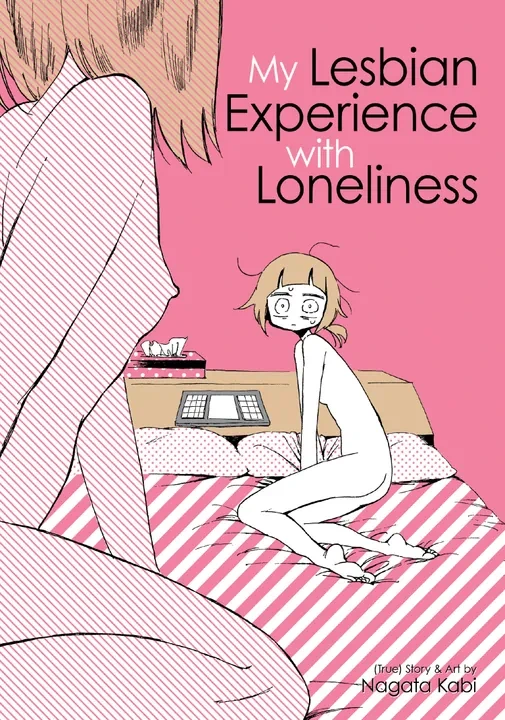
My Lesbian Experience with Loneliness Synopsis
My Lesbian Experience with Loneliness is a somewhat unconventional manga. Rather than delivering upbeat idealism and glamorous escapades, it presents an uneasy narrative centered on self‑examination.
The narrative centers on Nagata Kabi, a 28‑year‑old woman who struggles with mental health challenges and depression. As the plot unfolds, we witness her difficulties intensifying, eventually causing her to leave university and later lose her employment. These events exacerbate her psychological struggles, leading to an eating disorder, poor hygiene, and self‑injury. Her worsening condition drives her deeper into self‑destructive patterns. Despite being cognizant of her situation, she feels powerless to halt it, much like others in comparable circumstances. She seeks approval and longs for affection and love, yet frequently undermines herself. She believes that she is unworthy of happiness until she meets an unattainable ideal of expectation. At the same time, she recognises that love and a sense of belonging will remain out of reach unless she addresses her personal problems.

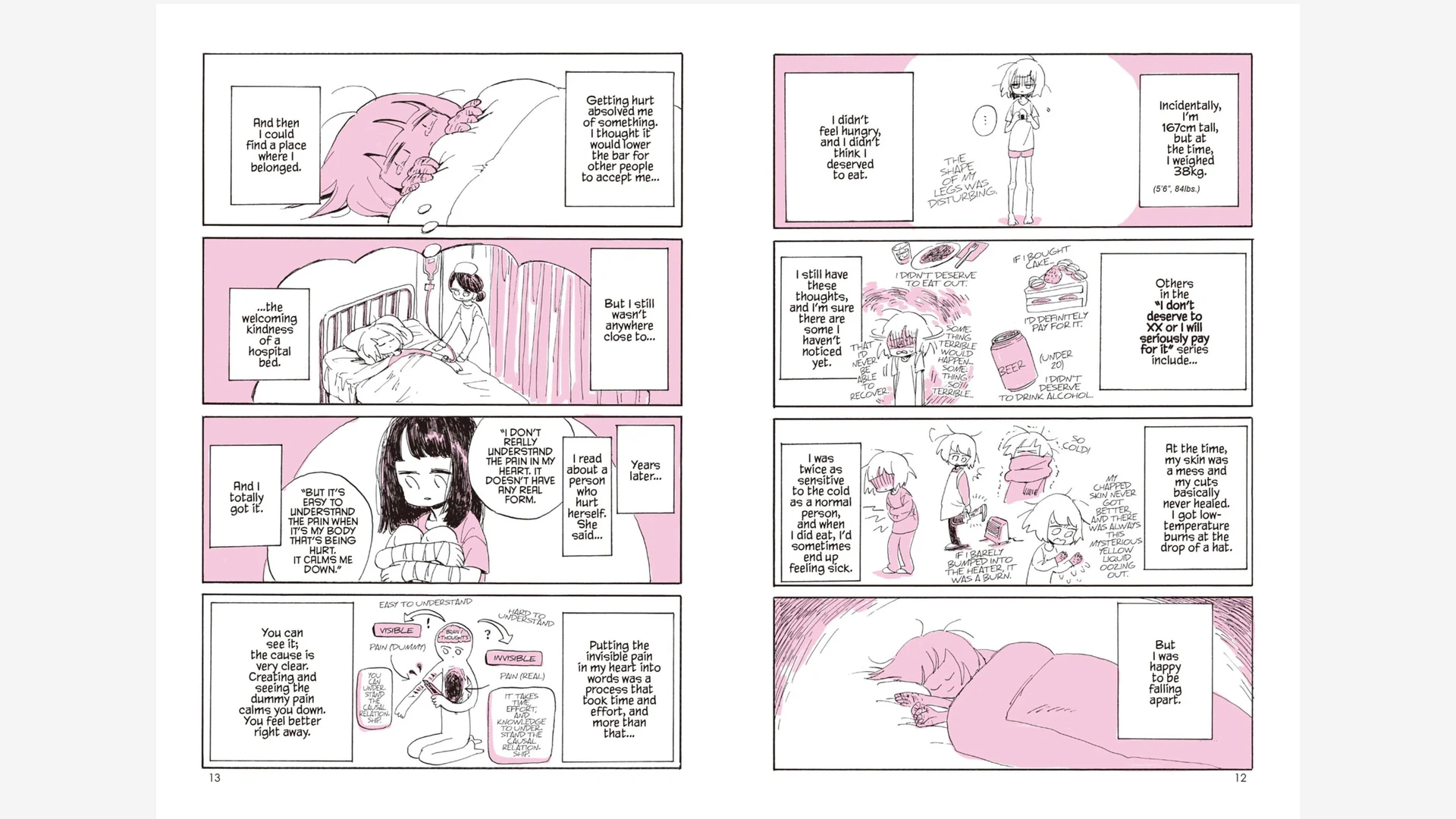
A Warm Place to Belong Pt. I
It is surprising that despite the prevalence of social media, people’s lives have become so detached. Perhaps we have always experienced loneliness, but we are only beginning to discuss it openly. Modernity often appears to clash with our fundamental social needs. Each location carries its own narrative, and each narrative is moulded by its environment; My Lesbian Experience with Loneliness and Japan are bound together.
Japan imposes some of the strictest societal expectations on its inhabitants. There is pressure to establish a career and achieve conventional life markers quickly. This pressure is significant within My Lesbian Experience with Loneliness. The cultural demands of Japanese society worsen Nagata-san’s mental health challenges. In contrast to Western societies, where individual autonomy is increasingly tolerated, Japanese culture still emphasizes the pursuit of traditional employment paths.
This dynamic is key to her difficulty, because acceptance often hinges on conformity. Individuals tend to approve of those who meet their standards or fulfil their criteria. Even those who profess openness will discard someone whose values stray from their own ideals. What, then, occurs when one seeks approval from people whose viewpoints differ or who oppose essential elements of their identity?
My Lesbian Experience with Loneliness does not reveal the underlying cause of Nagata’s mental health struggles, yet it illustrates what perpetuates them: the quest for parental and societal approval. Throughout the narrative, Nagata-san repeatedly seeks her parents’ endorsement. Since she could not derive contentment from their expectations, their approval remained elusive.
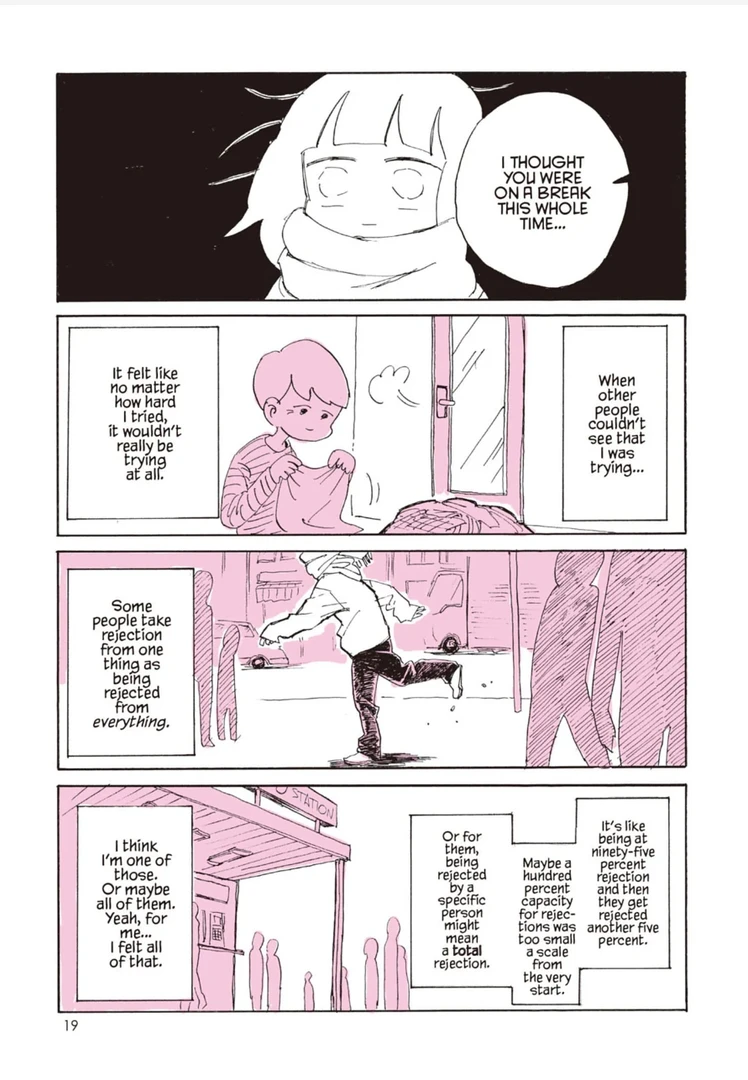
A Warm Place to Belong Pt. II
“It was the discomfort of accepting myself while others didn’t.”
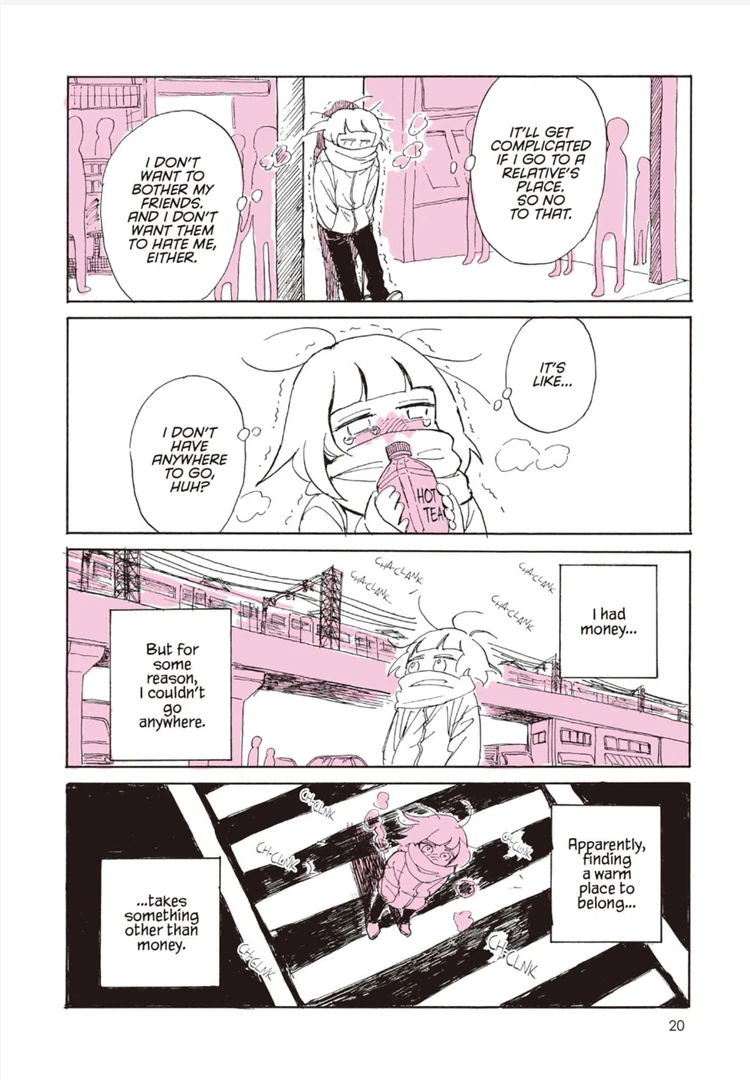
At length, Nagata-san confronts a jarring insight: achieving inner tranquility often involves letting others down. For an individual obsessed with gaining approval, this understanding is profoundly unsettling. When profound loneliness, depressive episodes, and low self‑regard compound the situation, momentum can stall entirely. However, anyone who has escaped such darkness will recognise a turning point: the realisation that unless one embraces oneself, acceptance from others will remain out of reach. My Lesbian Experience with Loneliness articulates this sentiment with clarity.
Sex, Loneliness & a Broken Mind
“In the pursuit of … comfort some people end up hurting themselves … clinging to bad sexual relationships.”
Both as a fictional persona and as a writer, Nagata Kabi portrays sexuality with a blend of wit and authenticity. While I was perusing the book, I discussed it with a colleague who had previously read it. She expressed surprise that a character as socially awkward as Nagata would resort to hiring an escort. My own despondent state of mind led me to agree wholeheartedly.
The work provides no timeline for events occurring within My Lesbian Experience with Loneliness. Nevertheless, I would guess there was a substantial interval between the moment she declared she would lose her virginity to an escort and the question “How do I pay you?” Nagata-san perceives her conduct as a business exchange, and such an exchange is understandable for someone experiencing profound distress. For an individual in that state, forming a genuine relationship appears unattainable. Paying to simulate a relationship is a pragmatic option. However, that arrangement does not deliver true intimacy, satisfaction, or solace, a lesson she discovered through personal experience.
However, the narrative treats Nagata-san’s sexual naïveté with a humorous tone. A character who identifies as an otaku and draws on yaoi and doujin materials as guides is likely to provoke amusement in readers. Yet, the sobering realisation arrives: this work is a memoir. It depicts an adult woman whose scant knowledge of sexuality led her to rely on such niche publications as educational resources—a circumstance of profound complication that is hard to fully comprehend. This difficulty is further magnified when one considers how mental health challenges intersect with sexual experiences.
The Problem Isn’t Fiction
“The problem isn’t stuff in fiction, it’s the fact that we’re never given the correct information.”
Sexual education has largely collapsed. Governments and educational institutions increasingly censor sexual content under the guise of maintaining public decency. This restrictive approach rarely enhances safety; instead, it tends to produce adverse outcomes.
Conservative groups contend that informing minors about sexuality prematurely introduces them to adult topics. However, such exposure is inevitable regardless of instruction. When appropriate resources are withheld, young people are exposed to unsafe or damaging content.
Let’s take the troubling trend of sexual asphyxiation as an example. Erotic asphyxiation was once a marginal practice. At present, its prevalence and associated dangers have reached such proportions that nations including the United Kingdom are contemplating legislation to prohibit its depiction in adult-oriented media. Proponents of such prohibition argue that minors and adolescents imitate the portrayals they encounter. Although this emulation is indeed concerning, legislative bans constitute a form of policy folly: they appear comprehensive in theory but seldom produce tangible benefits.
My Lesbian Experience with Loneliness addresses this subject with striking relevance. When individuals lack accurate guidance, they resort to whatever resources are at hand, which often range from worthless to dangerous. To foster a safer community, we must abandon simplistic sex education such as the “birds and the bees” approach and engage in candid discussions about more complex topics, metaphorically referred to as “hawks and hornets.”
Viewing My Lesbian Experience with Loneliness Through a Non-LGBTQIA+ Lens
As a heterosexual male, there are facets of certain lived experiences that remain beyond my comprehension. I can acknowledge the hardships faced by my female and gay acquaintances, yet I am unable to truly empathise with them. Many of their concerns elude my understanding. Nevertheless—and this is precisely why the work succeeds—My Lesbian Experience with Loneliness transcends this limitation. I perceived Nagata not merely as a lesbian grappling with mental health challenges, but as a universal figure confronting such difficulties, a perspective that proves priceless. An experience that should have remained alien to me suddenly resonated, and that resonance was painful.
The Art and Production of My Lesbian Experience with Loneliness
The success of a manga is heavily dependent on its visual presentation, and particular narratives require a specific artistic approach. A narrative such as My Lesbian Experience with Loneliness would be undermined by overly refined illustrations. However, Nagata-sensei’s raw sketches and restrained palette complement the work effectively. The book’s four‑panel format invites readers to scrutinize Nagata-san’s fragmented mental state. Even though the artwork remains unsophisticated and minimalist, the emotional impact is profound.
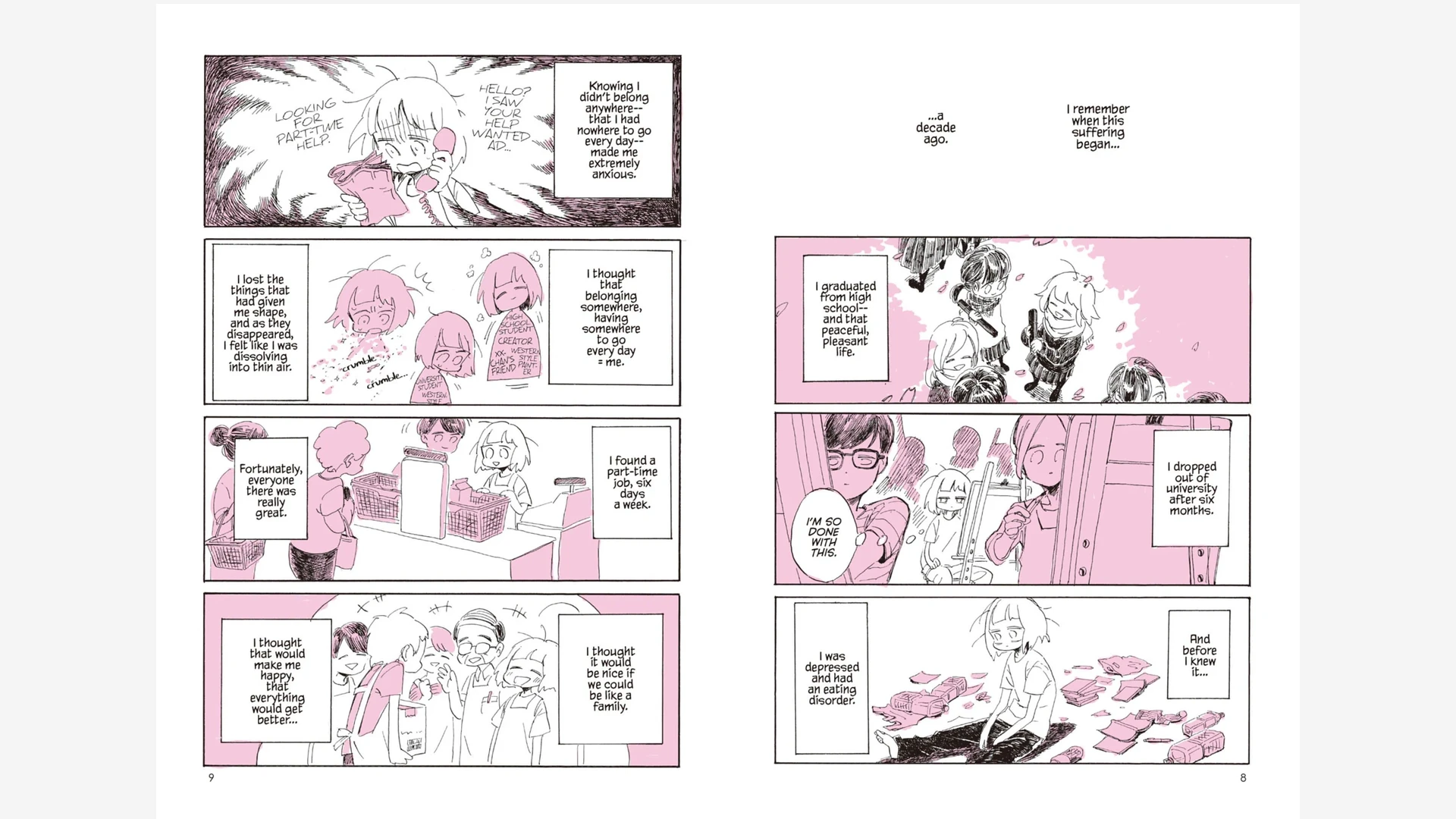
Lacking proficiency in Japanese prevents me from evaluating the accuracy of the manga’s translation. Nonetheless, I sensed that Jocelyne Allen’s rendition successfully communicated Nagata-sensei’s frustration and optimism. The typographic choices and page layout mirror those of the source material.
I can confidently state that My Lesbian Experience with Loneliness ranks among my top recommendations. If you have persisted thus far, I urge you to acquire a copy. It can be purchased in both physical and digital formats via BookWalker.
BookWalker offers a special edition of My Lesbian Experience with Loneliness as well.
ALSO READ
Otokonoko Zuma — Cross‑Dressing, Love and Acceptance
© Nagata Kabi • East Press
Explore additional Anime titles at Info Anime & manga terbaru.

Saya adalah penulis di thecuy.com, sebuah website yang berfokus membagikan tips keuangan, investasi, dan cara mengelola uang dengan bijak, khususnya untuk pemula yang ingin belajar dari nol.
Melalui thecuy.com, saya ingin membantu pembaca memahami dunia finansial tanpa ribet, dengan bahasa yang sederhana.